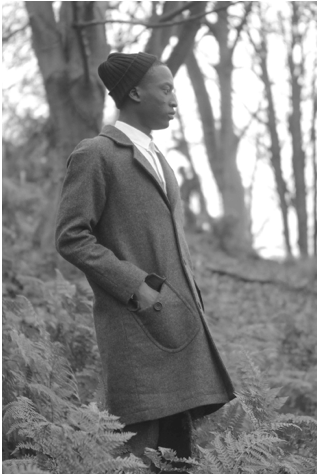
Sophie Elliott is a photography student at Norwich University of the Arts; she will graduate in May and aims to work in journalism.
Alongside her studies she runs a blog for feminist fashion, which is the basis for a small zine she is working on entitled Femme Sole Zine. She says the theme of the blog and zine is "anti-fashion", by which she means the inclusion of all women within the fashion industry, regardless of size, age, colour or sexuality.
Sophie kindly took the time to talk to us about her work and upcoming project. Read what she had to say here.
Since studying for a photography degree, how do you feel you have developed your practice?
I've definitely gained an understanding of the real world. Our tutors always encourage us to treat every brief as a live assignment, so that involves talking to galleries if your work is intended for an exhibition. In my case it's been an exploration of publishing and photography. I've always been interested in publishing and since studying I've discovered so many different mediums for print that I didn't know about before.
What sparked your keen interest in journalism?
As I said before, I've always been interesting in publishing - this started at a young age, when I was determined to be a writer. I've always loved writing and as I've grown up have moved away from fiction and into blogs and articles. I love writing, I love photography, and I love publishing, so a career that combines all of this things - whilst giving me a voice to express opinions and convey messages - would be amazing.
Have you always had an interest in feminism?
I haven't always actively had an interest, but I've always had this niggling voice in the back of my head that told me I was just as good as the boys. It's definitely down to my mother, who a couple of years ago left her job in order to become a feminist writer and blogger. When that happened, I realised how actively involved she was with the subject, and that led me to listen a bit more closely when people talked about it - leading to an inevitable interest in it myself. It opened up my eyes to something I'd been subconsciously taught all my life.

Where would you say you find your inspiration then?
I'm inspired by everything around me. I love going to exhibitions to see new work, and reading books about photographers I'd never heard of. I think black and white photography is beautiful, and have a soft spot for street photography and dark, eerie work. I'm also inspired by films and books, and narrative in general. If I have a specific project or brief I tend to look at similar work and then break it down into what I find wrong with it, and what could be done differently. Also, my parents inspire me a lot.
How did you set out to start your feminist fashion blog?
It was kind of in response to my photography course, where we're encouraged to work in a very commercial way to prepare us for the real world outside graduation. A lot of people on my course chose to follow the route of fashion photography, which I've always enjoyed as well due to the amount of possibilities. However everyone's work seemed to be influenced by the same photographers, shot in the same way, with the same colours and settings. Obviously the photos look great - they're all very skilled. But it's like the industry isn't moving anywhere because everything looks the same.
On top of this, every photographer chooses the same type of model: thin, young, and generally white. They're selling products to women who want to look like the models in the photos, forcing unreal ideals on young girls who aspire to be like the thin, glamorous models, and generally manipulating the general public. There's no transparency. Whereas, in reality, fashion is for everybody. It isn't exclusive, and you don't have to be thin, young or privileged to enjoy it. Making a statement through your style is a great form of expression, and there are hoards of feminist crafters and designers worldwide that aren't getting enough attention.
I want my work to focus on those people, and I want to make people realise that the fashion industry doesn't have to be the way it is - people just aren't willing to change. Fashion photography doesn't have to be degrading or manipulative. What's the point? All it does is marginalise people and contribute to patriarchal oppression.
You speak of working on a "feminist friendly fashion photography" project for university? Is this something you will continue with once you graduate?Definitely. The feminist friendly fashion photography is all for publication in the zine I'm working on, and this is something I will continue until it makes some kind of impact.
How do you keep these views in mind when you are creating new work?
I try to come with narratives or concepts within my work that have feminist undertones. For my newest shoot, Grrrl Scouts, we had the models wearing feminist badges and brooches in place of scout badges and the photos have a very organic and natural feel to them. I don't really like forcing models to pose in unnatural ways, or putting them in a setting that is wildly inappropriate to the theme. There's nothing manipulative about my work. I also try to ensure that nothing I photograph can be construed as offensive or triggering.

What can we expect to see in the Femme Sole zine you are working on?
The zine will be constructed from both my own photography, and submissions. The photography will generally be based around feminist-themed fashion, whilst the submissions can be on any subject so long as they're feminist. It'll be a small publication and hand-made, and will be available internationally by the beginning of March. The blog for zine, femmesolezine.tumblr.com, pretty much covers the subjects that will be looked at in the zine, as well as extras in the form of daily updates and impromptu articles.
Has it been a challenge to create your zine? How did you go about setting it up?
It was to begin with because I didn't know how to get people involved, but in the end I reached out on Tumblr and Twitter, and currently have over a hundred subscribers. Through the blog I have managed to circulate calls for submissions and casting calls, and have been able to keep people informed of events, plans and upcoming shoots. I've also been able to update on a daily basis, creating relevant and up-to-date articles that aren't big enough to be in the zine, but would interest the readers.
What has the general reaction to the project been so far?
It's been very positive. I haven't had any online haters, yet, and everyone who has responded to the blog has seemed genuinely interested in the idea. I hope that once the first issue is out, there'll be more curiosity about it. I want it to reach anyone interested in the subject, but it's a slow and natural process and I have to be patient.
What do you aim to achieve with this project?
I want women to realise that what they see in magazines isn't real, and that they are so much more than the caricatures portrayed in advertising. I want them to know that there is a whole community out there of people just like them, and to understand that their appearance is nobody's business but their own. They own their bodies, their styles, and their lives. You can dress how you want.
All I'm doing in the zine is showing people my own little ideas and concepts, not imposing rigid trends. In the end, I really want magazine editors to realise what they're doing by portraying this warped reality, and how it is harmful. It's not difficult to change, either. Even magazines that claim to be women-positive engage in these practises. Sex doesn't sell, it degrades. Manipulating a woman's paranoia to sell a product isn't necessary. And models don't all have to be thin, young and conventionally beautiful.
YOU CAN SEE THE PHOTOGRAPHY WORK OF SOPHIE ELLIOTT HERE AND KEEP UP WITH HER ENDEAVOURS TO CREATE FEMME SOLE ZINE [AND SEE MORE IMAGERY] HERE
See this post on the NOCTIS Magazine blog here